A pattern one supplier calls “Victorian” is another's “ogee”. Many merchant boards are reversible, with a different profile on each face, so one label covers two shapes. And the same name gets used for quite different sections: one maker's “torus” is a full half-round, another's is a flattened ellipse.
The names below are the common UK usage. Where we stock a profile, the depth we quote is the moulded head depth: how far the shaped section runs down from the top edge, measured on our own cutter.
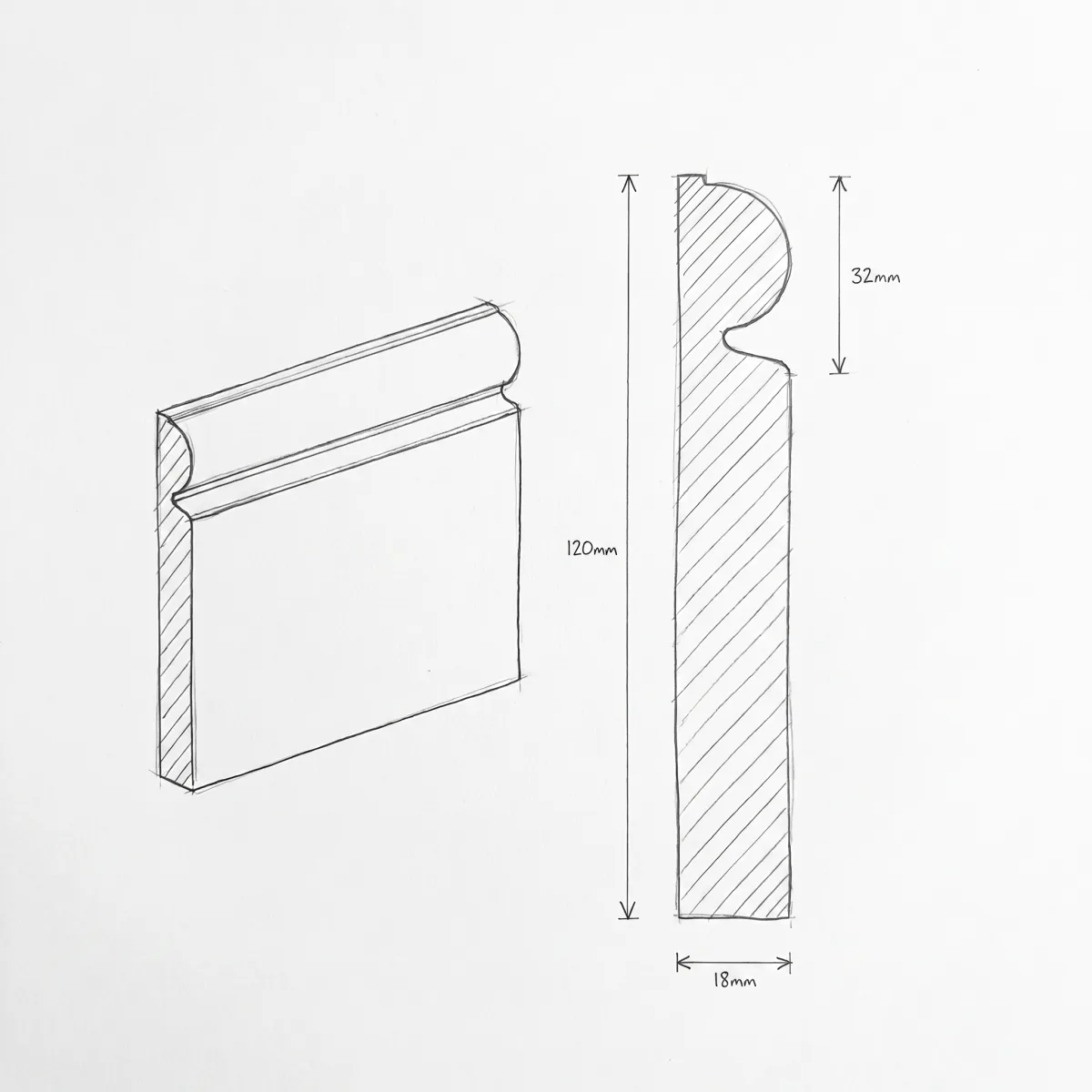
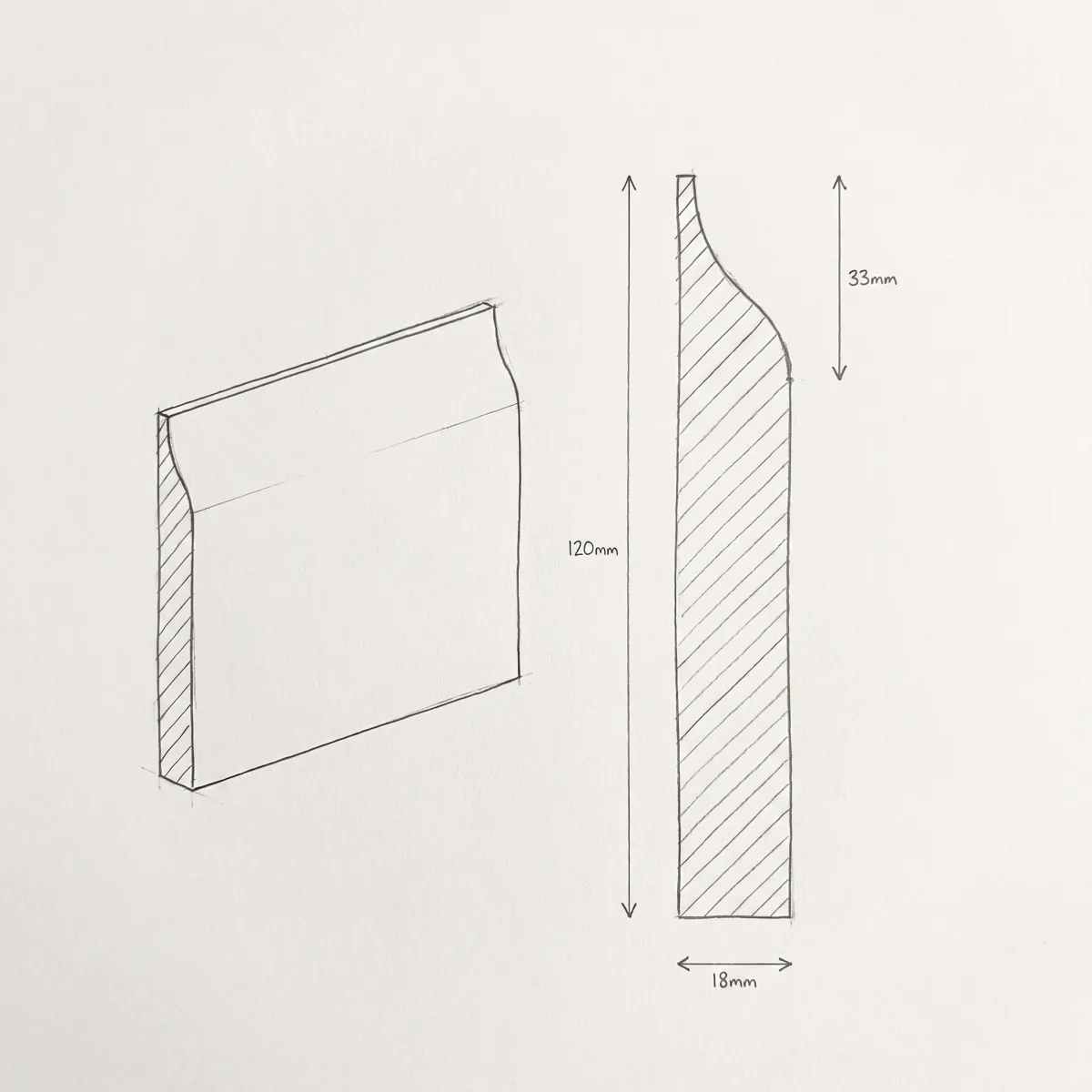
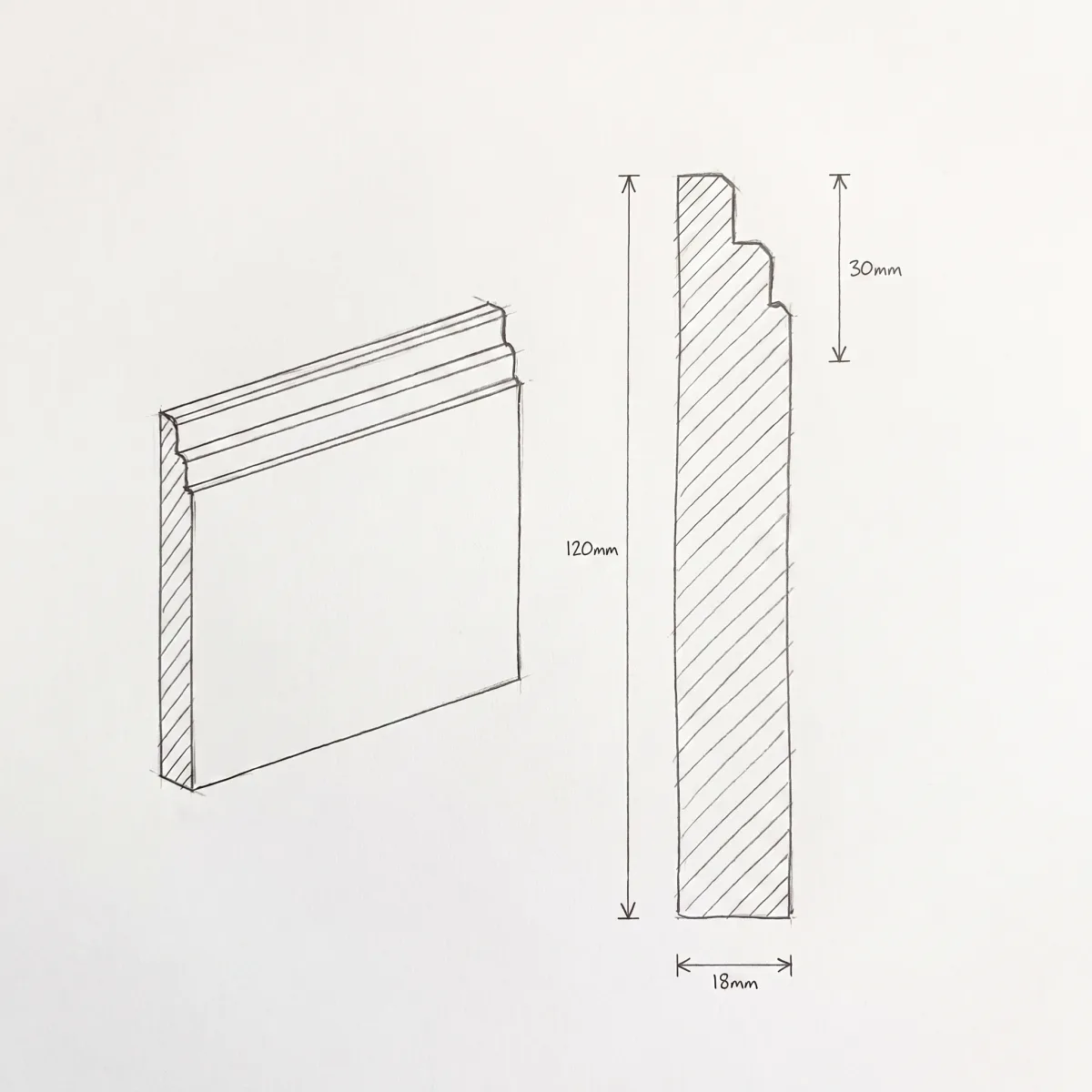
How to read the drawings. Each drawing shows the section as if you'd sawn through the board and looked at the cut end. That end view is the only view that shows a profile properly. The drawings are illustrations, not photographs.
The simple profiles
Square (or “plain”)
A flat board with square edges and no moulding at all. Common in contemporary builds and in rooms meant to look minimal. There's nothing to match except height and thickness, so any merchant can supply it.
Pencil round
A flat face with the top front edge rounded to a small radius, just enough to take the sharpness off. On our cutter the round is 3mm. Often seen in houses built or refitted from the late twentieth century on.
We stock it: Pencil Round skirting board →
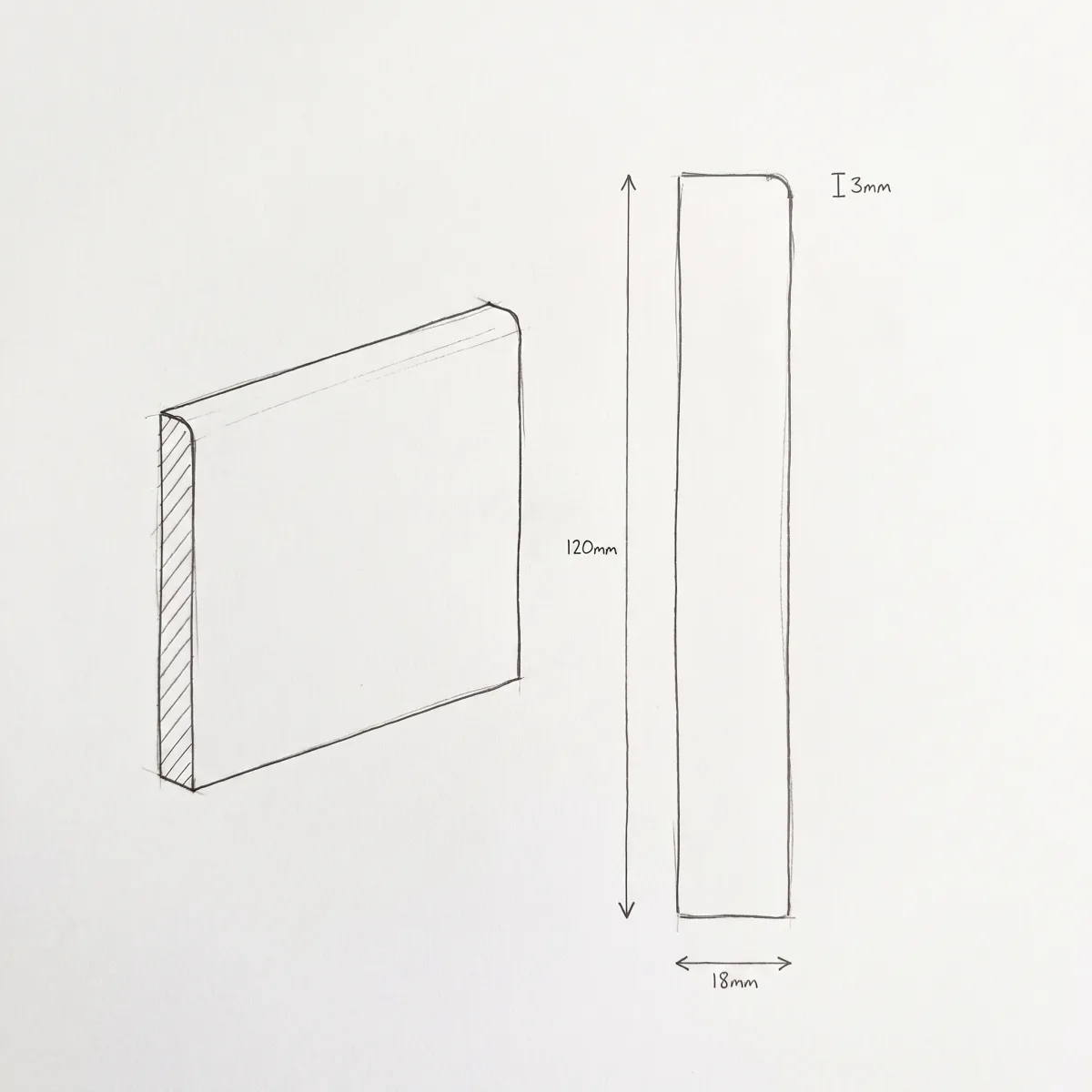
Bullnose
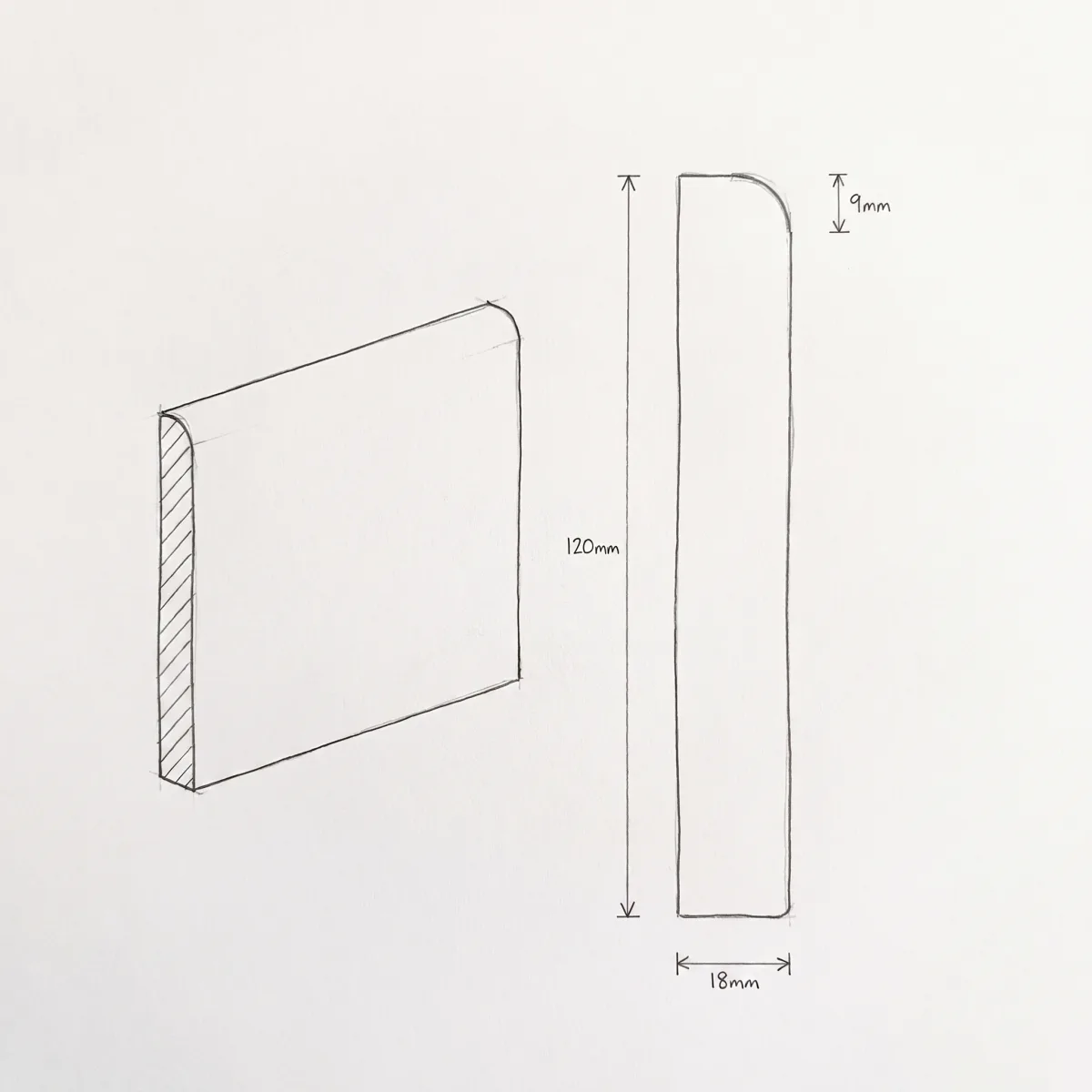
A bigger, fuller round on the top edge. It reads as a soft shoulder rather than a softened corner. On our cutter the moulded head is 9mm.
Pencil round vs bullnose: if you can see a curve from across the room, it's bullnose. If you only feel it with your thumb, it's pencil round.
We stock it: Bullnose skirting board →
Chamfer, and chamfer & pencil round
A straight bevel (often around 45°) across the top edge. “Chamfer & pencil round” adds a small round where the bevel meets the face or the top. Widely sold in pine by merchants as a stock board, often reversible with pencil round on the other face.
Not a stock cutter with us. A bespoke cutter reproduces it from your offcut.
The classic curved profiles
Torus
A convex, rounded bead at the top, usually with a small step or groove (a quirk) below it before the flat face. Some are close to a half-round; others are flatter and more oval. One of the most common period profiles in UK terraces, and often sold as a reversible torus/ogee board. On our cutter the moulded head is 32mm.
We stock it: Torus skirting board →
Ogee
An S-shaped curve: a hollow (concave) that turns into a swell (convex), or the reverse. Architects call the two versions cyma recta and cyma reversa. Our Ogee is the classic cyma recta, concave falling into convex, with a 33mm moulded head.
We stock it: Ogee skirting board →
Quirked ogee
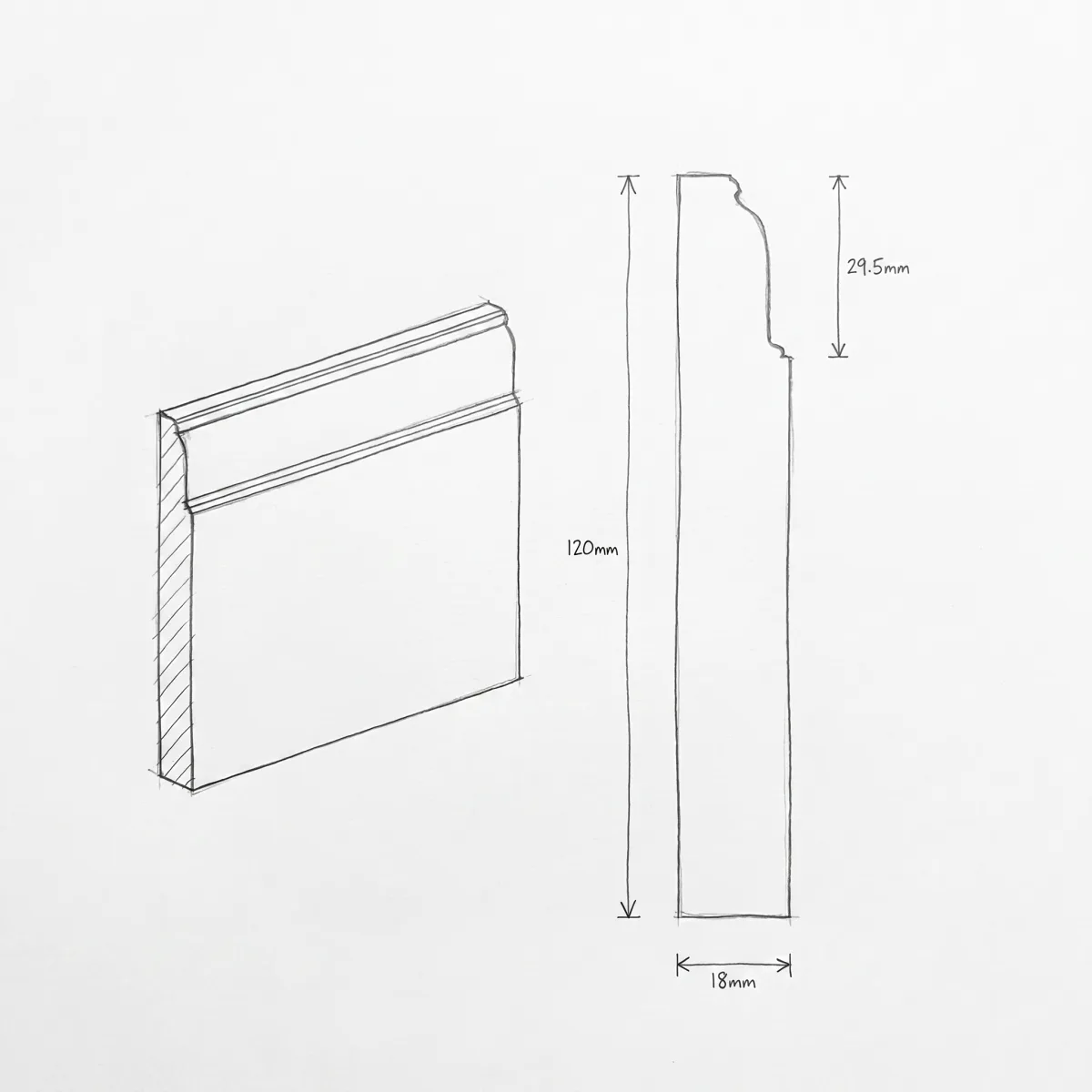
An ogee with a set-back top, a soft round-over and a crisp quirk (a small, sharp recess) where the curve finishes. Our Quirked Ogee was traced from a real Victorian board with our own trace sheet. Its moulded head is 29.5mm.
We stock it: Quirked Ogee skirting board →
Lamb's tongue
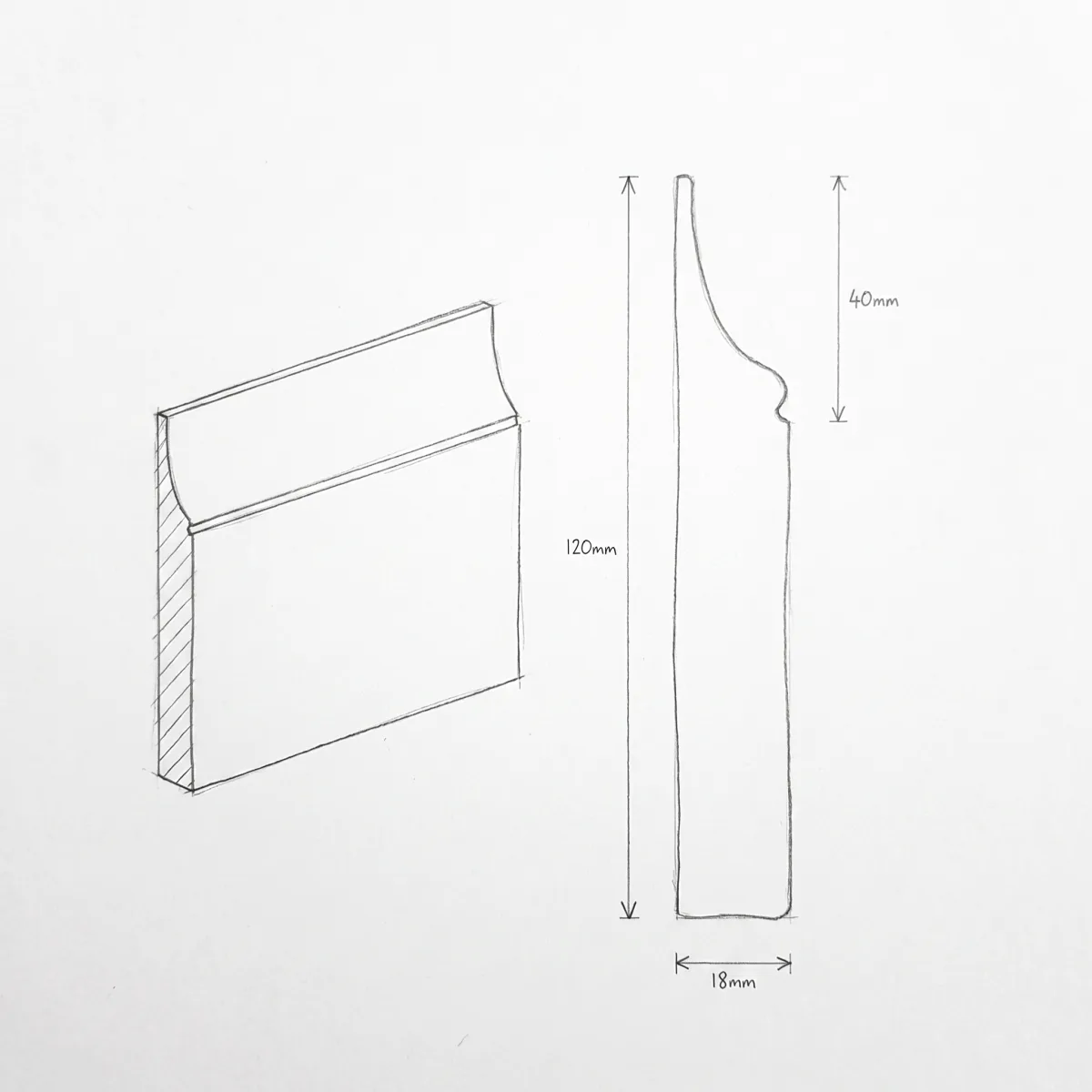
A long, shallow sweep that gathers into a small rounded “tongue” near the top. Quieter than an ogee, with a softer shadow. Often found on tall boards in Georgian and early Victorian houses, and some 1930s boards look similar. On our cutter the moulded head is 40mm.
We stock it: Lamb’s Tongue skirting board →
Ovolo
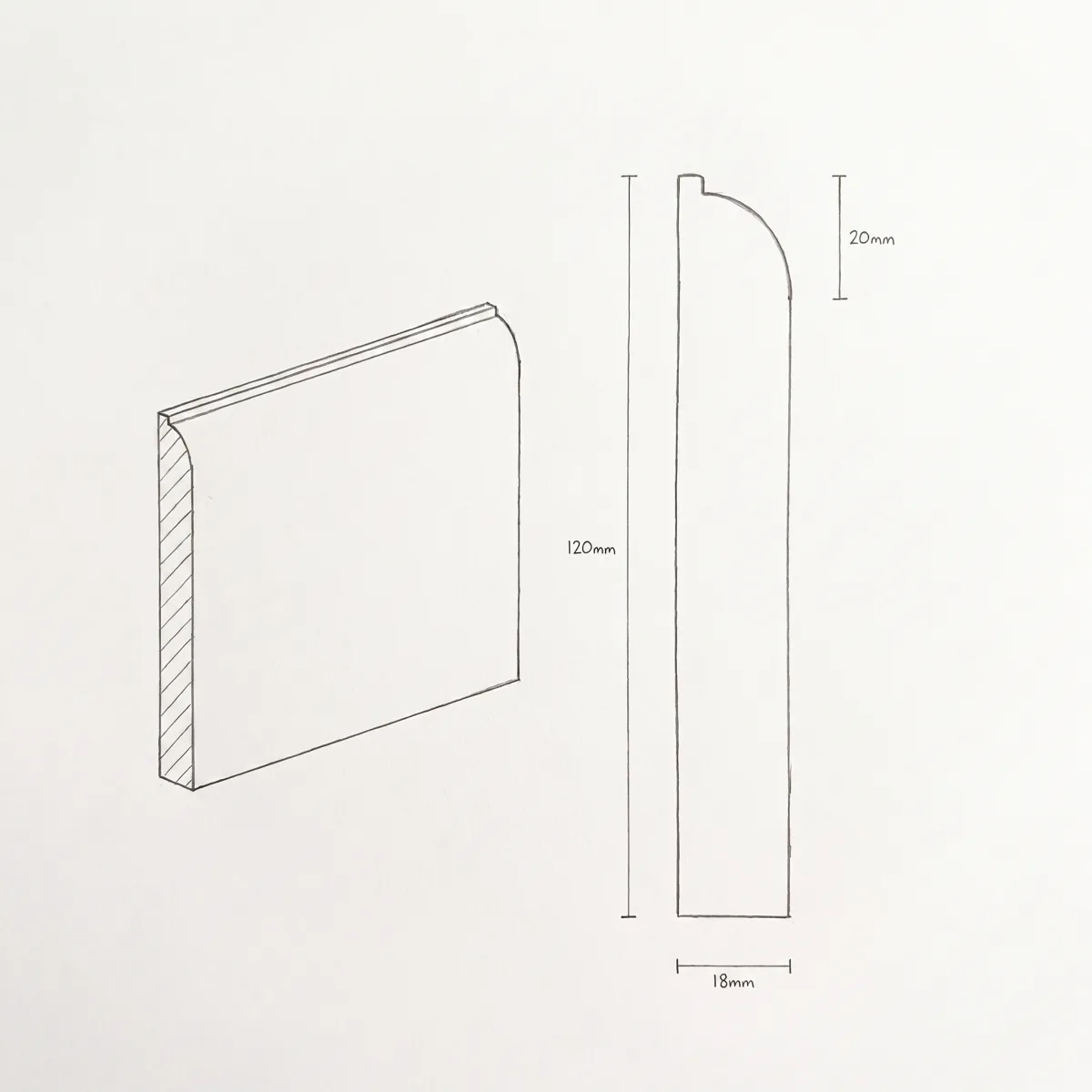
A convex quarter-round between two small flat steps (fillets). Think of it as a torus cut in half: it swells out once and stops. On our cutter the moulded head is 20mm.
Ovolo vs bullnose: an ovolo has the little flat steps above and below the curve, and a bullnose doesn't.
We stock it: Ovolo skirting board →
The deeper and decorative profiles
Scotia (cove) with bead: our “Regency”
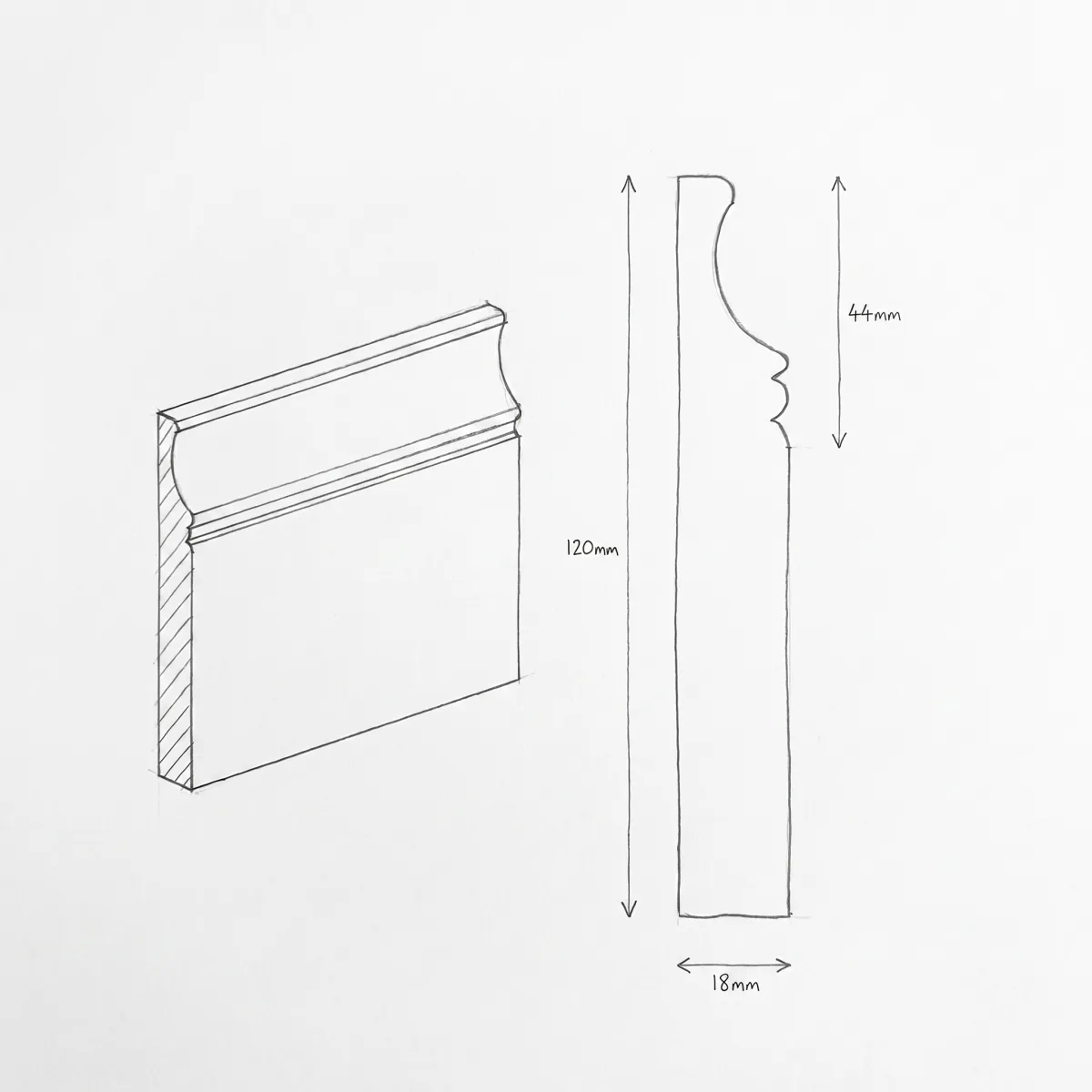
A deep hollow (scotia) framed by crisp fillets and a bead. The hollow makes a strong shadow line. Associated with late-Georgian and Regency drawing rooms. Ours has the deepest section in the library, a 44mm moulded head.
We stock it: Regency skirting board →
Cove
A simple concave sweep with no bead. A minimal profile with a soft shadow.
Not a stock cutter with us. A bespoke cutter reproduces it from your offcut.
Bead, double bead and reeded
One or more small half-round beads, sometimes stacked with quirks between, giving a reeded look. Found on panelled halls and on some Victorian and Edwardian boards.
Not a stock cutter with us. A bespoke cutter reproduces it from your offcut.
Stepped (Art Deco)
Rectilinear steps with bevelled shoulders instead of curves. Typical of interwar flats and mansion blocks. Ours, Deco Step, has three steps and a 30mm moulded head.
We stock it: Deco Step skirting board →
V-groove
A flat or pencil-round board with one or more V-shaped grooves cut into the face.
Not a stock cutter with us. A bespoke cutter reproduces it from your offcut.
“Victorian”, “Edwardian”, “Georgian” as profile names
Many suppliers sell a profile simply called “Victorian” or “Edwardian”. These are trade names, not historical categories, and each maker's version is different. Go by the shape: it will usually be a combination of the elements above (a bead, a hollow, an ogee, steps).
Quick identifier
| What you see at the top of the board | Likely name |
|---|---|
| Nothing, square edges | Square |
| Corner just softened | Pencil round |
| A full rounded shoulder | Bullnose |
| A straight bevel | Chamfer (± pencil round) |
| A single swelling bead, often with a groove under it | Torus |
| An S-curve: hollow then swell | Ogee |
| An S-curve with a step back at the top and a sharp groove | Quirked ogee |
| A long gentle sweep ending in a small round | Lamb's tongue |
| A quarter-round swell between two small flat steps | Ovolo |
| A deep hollow between a bead and fillets | Scotia / our Regency |
| Straight steps, no curves | Stepped / Art Deco |
| Small stacked beads | Bead / double bead / reeded |
Why the name isn't enough
Two boards with the same name can need different cutters, and two boards that look different can come off the same cutter at different heights. The cutter shapes only the top section; the flat face below is just the height of the timber. That's why we match on the moulded section, measured in millimetres from the top edge, and treat the name as a label. How to match an old skirting board →
Find out which one yours is
- Scan it. Draw round a cut end with a bank card beside the line and photograph it. The scanner reads it in true millimetres (±1mm) and checks it against every cutter in our library. Scan your board →
- Post it. A hand-width offcut in a large-letter envelope, £9, credited against your order. Post us a sample →
Every stocked profile is milled to order in solid pine, not MDF, at six stock heights from 95mm to 220mm, from £18 to £36 per metre, in 5–7 working days. If yours isn't on the rack, we grind a cutter to it: £18 per metre plus £120 for the cutter, waived over 25m, 7 days from your sample.
Browse by era: Victorian · Edwardian · Georgian · Regency · Art Deco · Modern · the whole library