Victorian era: 1837–1901
Victorian skirting boards
Deep boards and strong shadow lines: the torus and ogee profiles of the terrace, matched to what's already in your hall. Where the rack doesn't carry your section, we grind a cutter for it.
Victorian profiles we cut from stock
From stock, the SkirtingMatch library cuts Torus (32mm moulded head), Ogee (33mm moulded head) and Quirked Ogee (29.5mm moulded head), milled to order in solid pine at six heights from £18 to £36 per metre, in 5–7 working days.
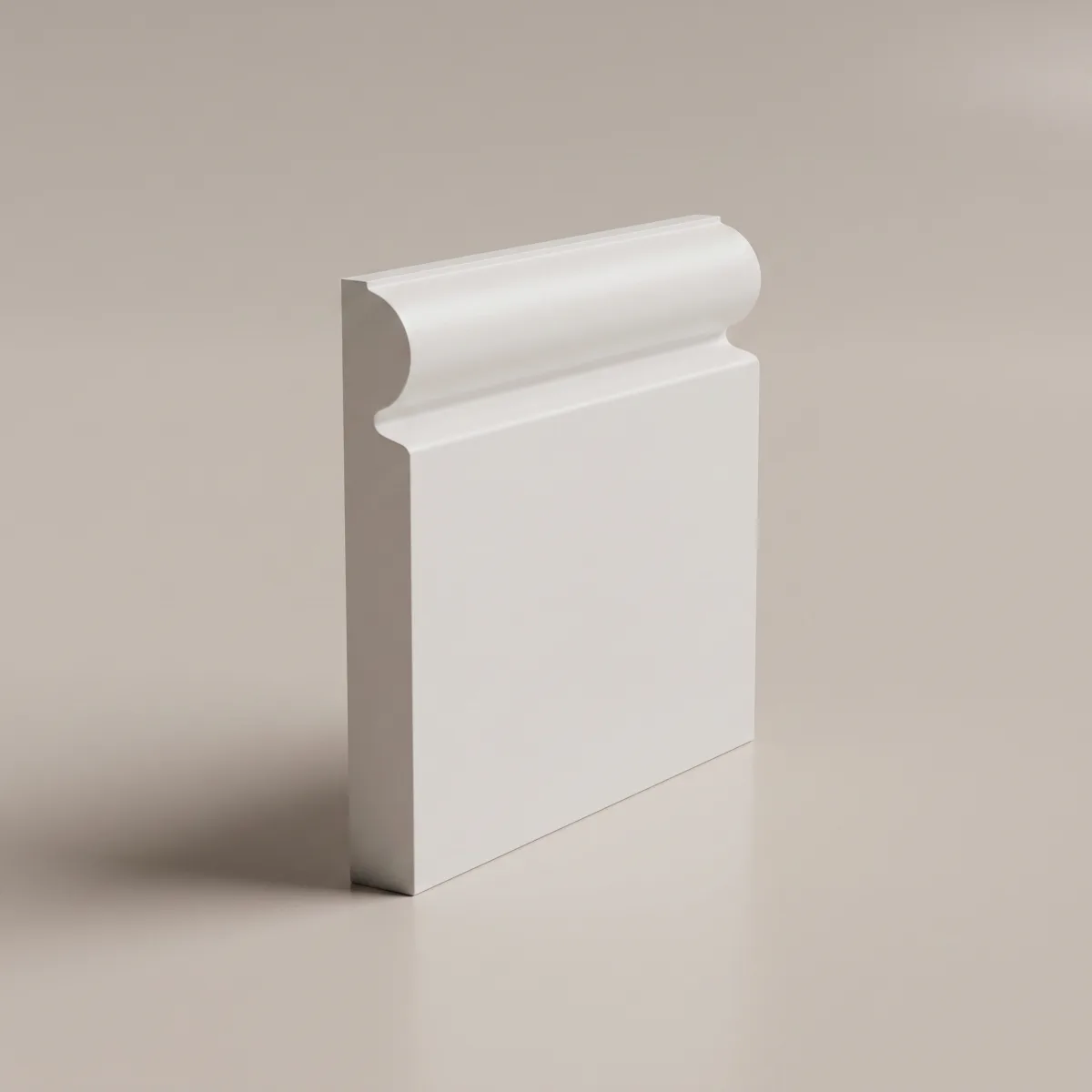
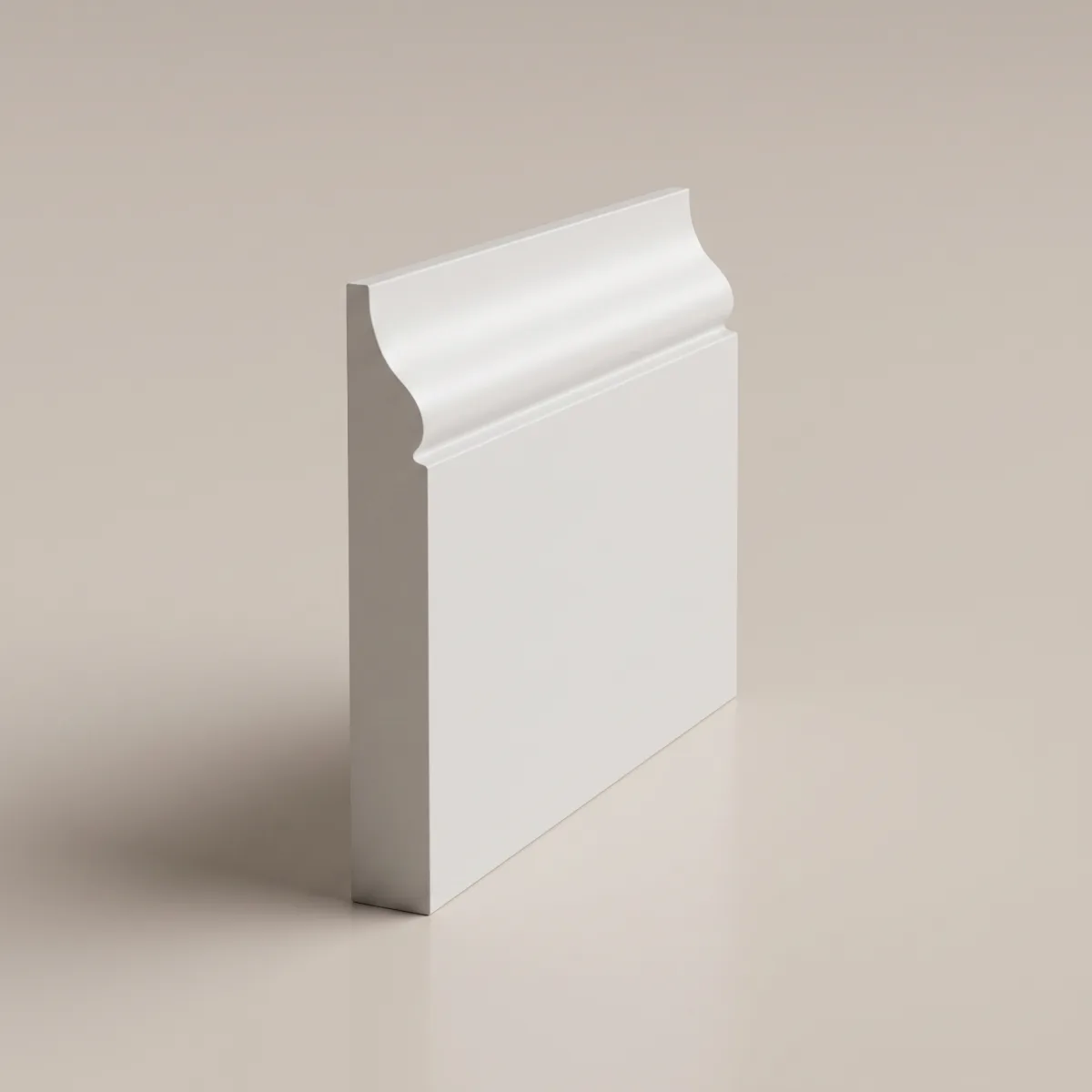
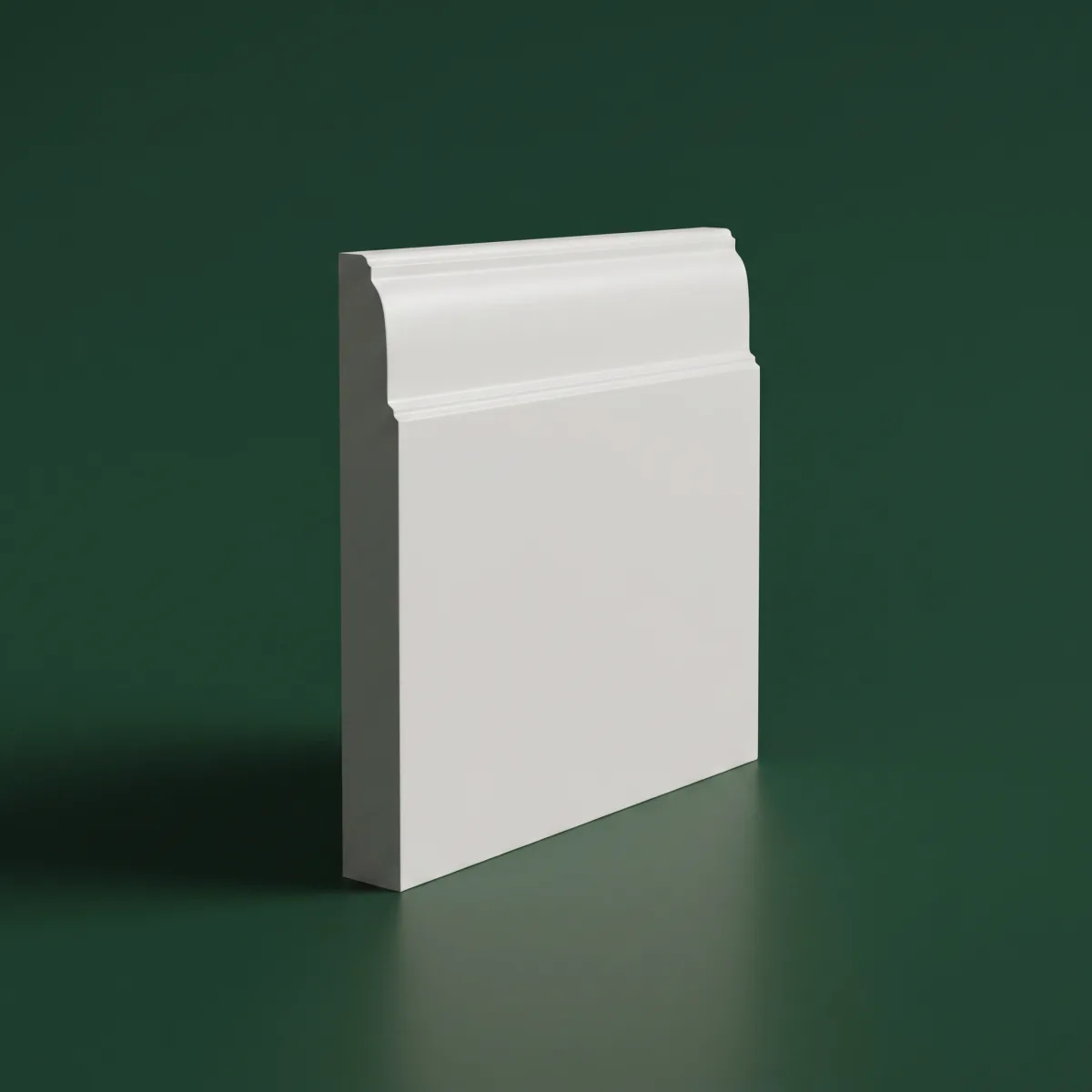
Not sure which of these is yours? Scan your board — the library will tell you.
How to recognise a Victorian skirting board
Victorian skirting was made to be seen. Most of it is softwood, painted, with a moulded top that throws a clear shadow line. What you'll commonly find:
- Deep boards in the principal rooms. Halls and front rooms usually got the tallest and most moulded boards; bedrooms and upper floors often got plainer, lower ones.
- A strongly shaped top: a single bead, an S-curve, or a combination of the two.
- A quirk, a small sharp groove, often separating the moulding from the flat face.
- Decades of gloss. Paint rounds over the crisp details, so read the section at a cut end where it is thinnest.
- Pattern-book shapes repeated street by street, but each joinery shop's cutters differed slightly. That's why two boards both called 'torus' can need different cutters.
Names and dates only get you close. A match comes from the section itself, measured at a cut end from the top edge down. How to match an old skirting board
Not on the rack? We grind the cutter
Victorian houses also carry reeded boards, double beads, built-up sections and profiles unique to one builder. Those aren't stock cutters with us. Post us an offcut and we grind a cutter to the exact section: £18 per metre plus £120 for the cutter (waived on orders over 25m), milled 7 days after your offcut arrives.
Either your profile matches a cutter in our library, or we grind a bespoke cutter for it in 7 days. How bespoke works
Matching architrave
Quirked Ogee is also milled as matching architrave at 57mm (£14/m), 70mm (£16/m) and 95mm (£18/m), in the same solid pine. Architrave to any other profile is a bespoke run from your offcut.
Questions
How do I identify Victorian skirting boards?
Victorian skirting is usually deep, with a strong shadow line from its moulded top. Look at a cut end: a single stout bead is a torus, an S-curve falling from hollow into swell is an ogee, and an ogee with a set-back top and a crisp finishing quirk is a quirked ogee. In the SkirtingMatch library the Victorian profiles are Torus (32mm moulded head), Ogee (33mm moulded head) and Quirked Ogee (29.5mm moulded head), each milled in six heights.
Can you match Victorian skirting that has been painted many times?
Yes. Paint adds thickness and softens crisp details, so the section is read at a cut end where the paint is thinnest. Our Quirked Ogee was traced from a painted Victorian board: it measured 171.8 × 19.1mm, and about 1.1mm of that thickness was paint on stock of 170 × 18mm.
What if my Victorian skirting isn't torus or ogee?
Then it's a bespoke run. Post a hand-width offcut and a cutter is ground to your exact section: £18 per metre plus £120 for the cutter (waived on orders over 25m), milled 7 days after your offcut arrives. The cutter stays on file for reorders.
We match any skirting board. Guaranteed. If your profile isn't one of the cutters in our library, post us an offcut. We grind a cutter to your exact section and mill it in seven days — and the cutter stays on file, so the next metre is never a problem again.